
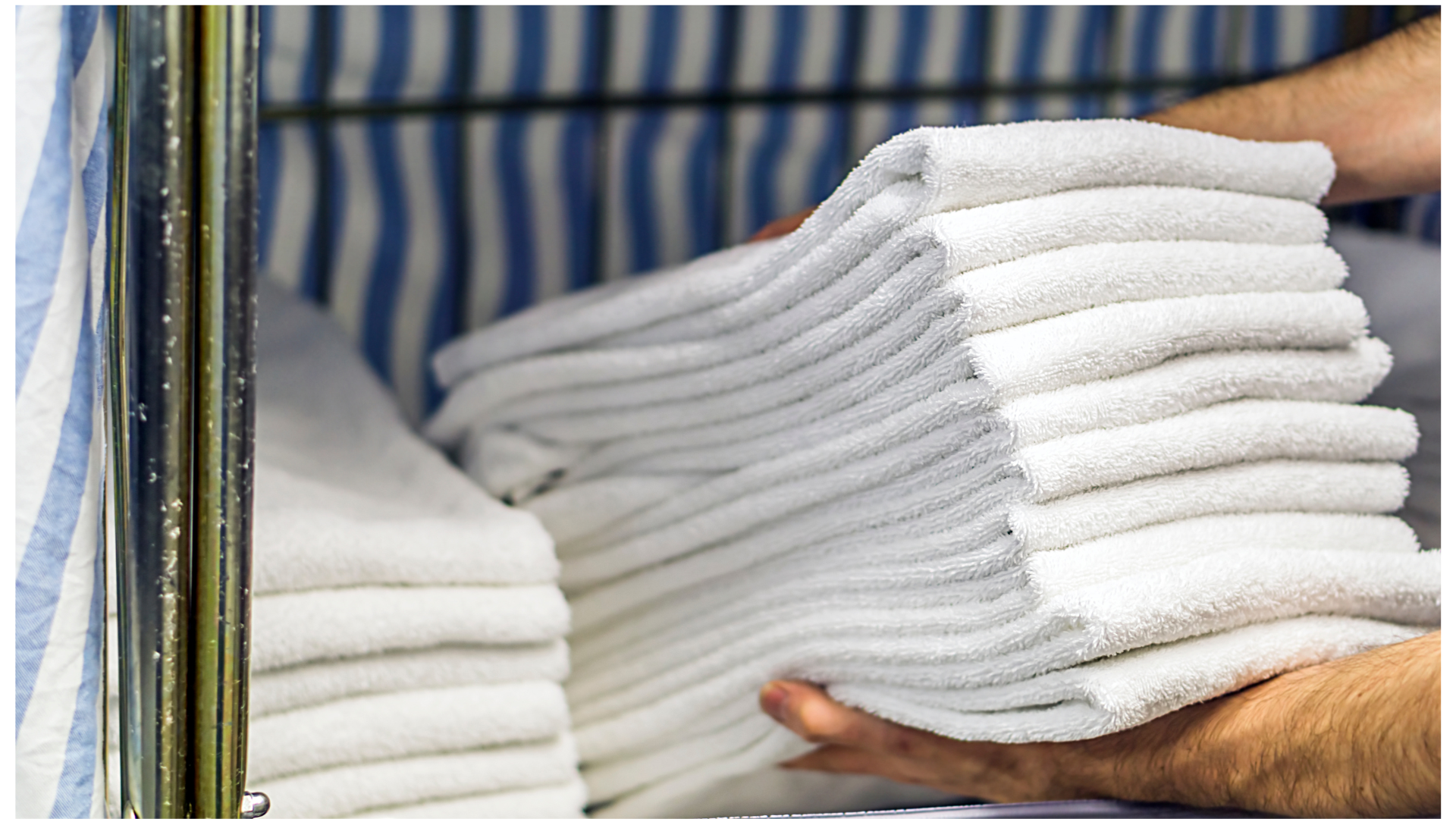
You Don’t Know What You Don’t Have: How to Fix Your PAR Levels Before They Fix You
How do you keep your small hotel linen PAR levels healthy? I didn’t bring in a consultant or buy new software. I used what we had, and I applied a framework I had been building in my own head for years, something I now call OSTRO: Observe, Strategy, Test, Refine and Operate.
The Job I Didn’t Ask About
I didn’t ask for the job. After years running security operations, incidents, evictions, disturbances, all the fun of it, a non-traditional GM, and later a good friend, offered me a lateral move into Housekeeping and Laundry. My first reaction was somewhere between confused and annoyed. I knew Security and Safety like the back of my hand, and knew how to handle an emergency at any time. I had an almost perfect multi-functional security team, but hotel linen PAR levels, laundry cycles, and room credits were a completely different world.
The offer was less of an offer and more of a push. So I jumped.
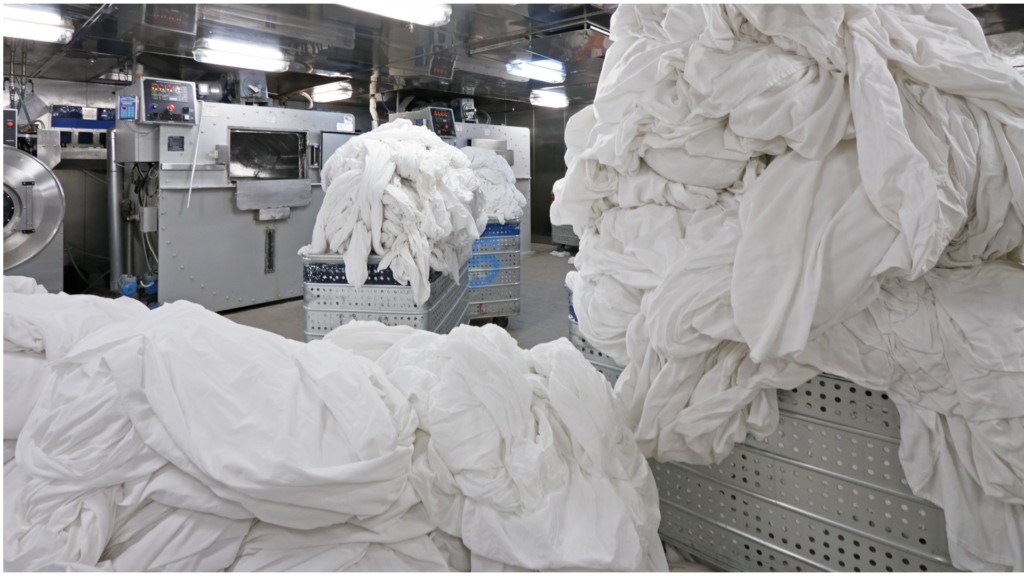
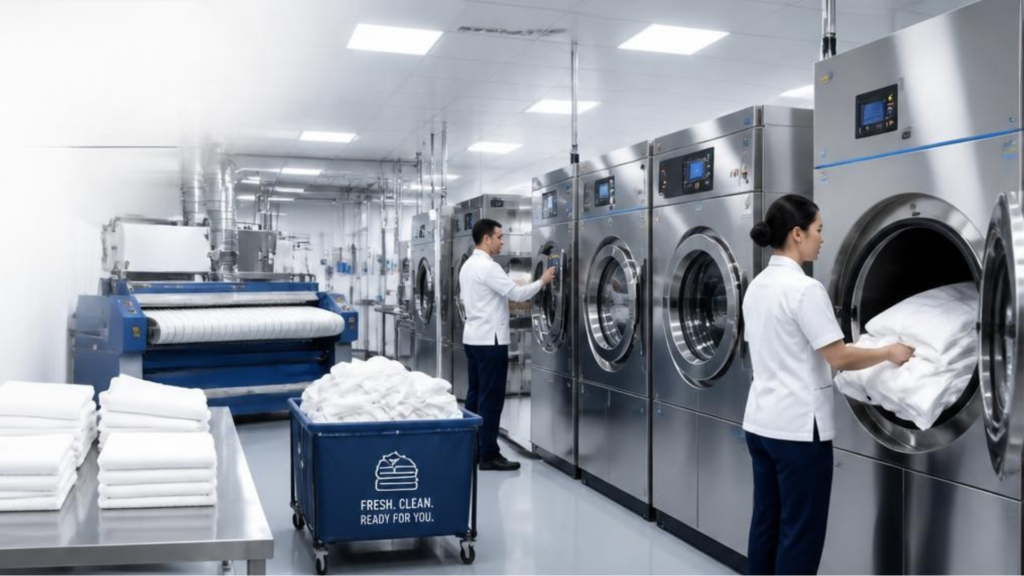
For the first two weeks, I said nothing. I just walked the floors and watched. I watched carts get loaded and unloaded. The laundry room running loud. Room attendants asking for this and that, and storage rooms get opened and closed. I didn’t touch anything or suggest anything. I just paid attention.
By week two, I had seen enough.
The Problem Nobody Was Talking About
The operation wasn’t broken in the way you’d expect. Nobody was sleeping on the job, nobody was cutting corners on purpose. The people were doing their best. But the system underneath them was a mess nobody had ever stopped to look at.
On one shelf: five times the inventory we needed. On another: a shortage that sent someone on an emergency run to the supply store; yes, again. Guest supplies running low mid-shift, with no warning and no backup. Purchasing decisions made by gut feeling, not data. A storage room that held everything, organized by nothing.
The most expensive part wasn’t the emergency run, and all what it entitled at that time. It was the fact that nobody knew it was coming.
Over the time, I realized that the problem wasn’t my department. It was every housekeeping department that had ever tried to run without a system.
It’s Not Just You: The Industry Has the Same Problem
This was not unique to that property. It’s not even unique to small hotels. According to Hotel Online, hotels lose between 20% and 30% of their linen inventory every year, at a cost of more than $50,000 annually, due to general wear, theft, and poor control systems.
That’s the number for a full-size hotel with a purchasing department and a dedicated housekeeping manager. For a small property running on one or two people per shift, the percentage hit is the same, but there’s no buffer to absorb it.
And it compounds fast. Properties with no formal forecasting system are spending more than they need to, ordering when they panic instead of when they should, and still running out.
Guests don’t file complaints about your inventory system. They don’t know you had four towels in that room instead of six. What they complain about is the linen that looked old, the towel that was torn, the sheet that came back stained. Or worse, your staff telling them there are no more clean sheets available.
When your linen supply chain breaks down, what they experience is a failure they didn’t expect, and what you get is a review you can’t take back.
What PAR Actually Means, And Why It Matters for a Small Hotel
PAR stands for Periodic Automatic Replenishment. In plain language, it’s the number of a given item you need to maintain continuous operations through one full cycle.
For linen and terry, the hospitality standard is three PARs:
- PAR 1 — What’s in the guest rooms right now, made up and in use.
- PAR 2 — What’s in the laundry cycle; being washed, dried, or folded.
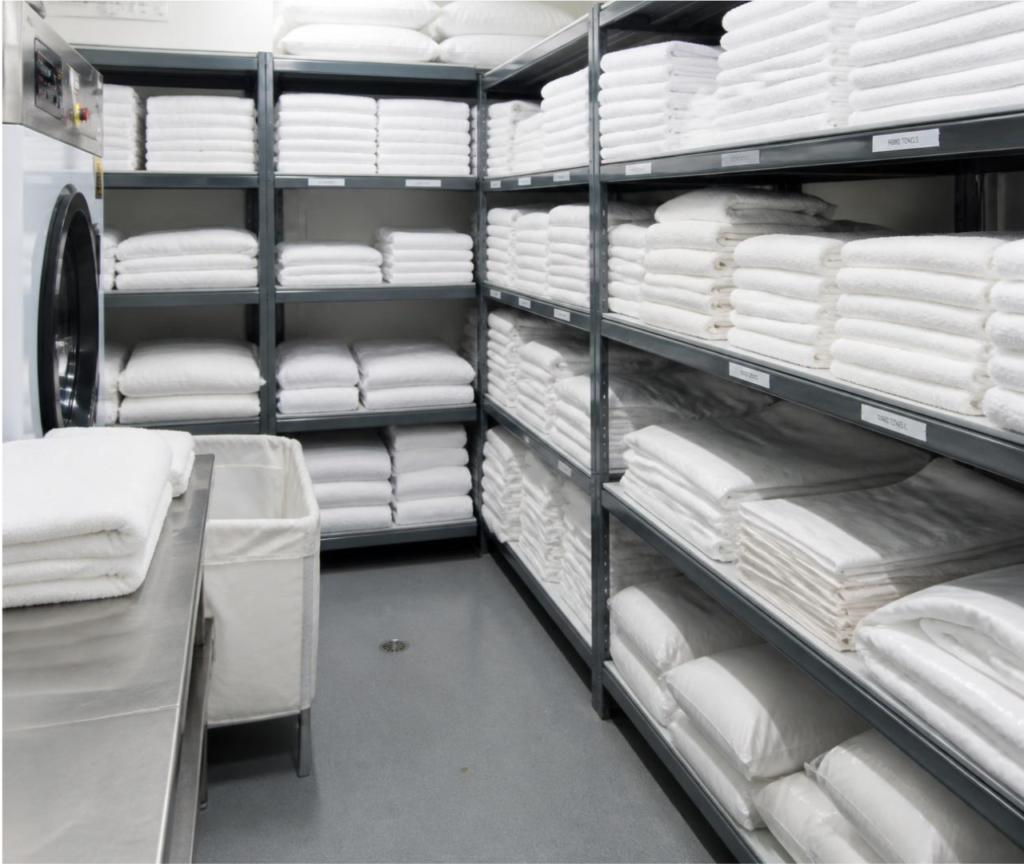
- PAR 3 — What’s clean and guest-ready in storage; on the shelf or still in the box.
If any one of those three layers goes empty, the whole cycle breaks. Your rooms can’t be made up because there’s nothing clean to put in them. Your laundry can’t cycle because you’ve already pulled everything into service. That’s when the emergency run happens.
Small Hotel Linen PAR Levels by Property Size
Say you run 10 rooms. Each room needs two sets of sheets. That’s 20 sets minimum for PAR 1. Multiply by three PARs and you need 60 sets to operate cleanly. Most 10-room properties are running on 25 or 30 sets and calling it covered. They’re not. They’re just one busy weekend away from a problem.
Scale it up to 30 rooms with three different room types, and the math gets uncomfortable fast. The inventory gap doesn’t shrink as your property grows; it grows with it. And for small properties, there’s no corporate supply chain to bail you out when the numbers don’t add up.
At that time, I used a PAR calculator to find my linen and terry levels. You will find it at the end of this article, along with every other tool you need to run this system.
How I Fix My Hotel Linen PAR Levels With The OSTRO Framework
I didn’t bring in a consultant or buy new software. I used what we had, and I applied a framework I had been building in my own head for years, something I now call OSTRO: Observe, Strategy, Test, Refine and Operate.
Here’s how it played out in a real laundry room with real problems.
Observe
Before I touched anything, I mapped it. Every step of the linen cycle, from checkout to collection, laundry to sort, wash and fold, storage to cart, cart to room, I documented what was actually happening, not what was supposed to happen.
What I found was four consistent break points:
- Over-production. Laundry was running based on habit, not data. Items were being washed in bulk whether they needed it or not, driving up labor, utilities, and supplies costs and creating a false sense of abundance in some categories.
- Gut-feel purchasing. Orders were placed when someone noticed something was low, or when they ran out. No PAR number, no reorder point, no data attached to any decision. Just instinct and memory, both of which are unreliable at scale.
- Uncontrolled storage. The storage room held everything, but nothing had a home. Items were stacked wherever they fit. Counts were guesses. Replenishment was random.
- No discard or loss tracking. There was no biohazard protocol in place. A stained towel, a torn sheet, and a genuine biohazard all got treated the same way: gone. No separation, no logging, no distinction between what was discarded for a real reason and what simply disappeared.
I spent two weeks just in the Observe phase. That felt slow but it wasn’t.
Strategy
Once I understood the break points, I built around them, not over them.
I created linen request forms and distribution sheets tied to departures, not to a blanket schedule. If six rooms were checking out, those six rooms drove the linen pull. Everything else stayed put.
I reorganized storage by category: bed linen in one section, terry in another, guest supplies in a third. Each category had a fixed home. Each item had a count sheet. Nothing moved without being logged. You can divide sections however your property allows. Not every hotel has three or four separate storage rooms, and that’s fine. The principle is the same: everything has a home, and nothing moves without a record.
I also built a proper discard system. A daily card for us to log every stained, torn, or worn-out items were tagged and recorded before leaving inventory. Biohazard items were separated and handled under a basic protocol, not discarded into the same pile as everything else. For the first time, we knew what we were actually losing and why. That made the purchasing numbers honest. (Download the Daily Discard Card)
Then I counted every piece we had, every box, and every rag. I built an inventory tracker: a spreadsheet, nothing fancy, no new software. It tracked what we had, what we used, what we needed to order, and what was in cycle; and it didn’t need to be perfect on day one.
Test
I didn’t roll this out property-wide on day one. I picked one floor and ran the whole system through it: request forms, distribution, storage pull, count update, reorder trigger. One floor, full cycle, watching for gaps in real time.
There were gaps. I fixed them on the run. Then I ran the cycle again, and again. Until it held.
Only when one floor was running cleanly did I expand to the rest of the property. That sequencing matters. Rolling out a broken system at scale just creates a bigger broken system.
Refine and Operate
Once the system was running property-wide, I kept adjusting. The tracker got updated as I learned more about our actual usage patterns. PAR levels shifted slightly as we got real data instead of estimates.
Four months in, we had achieved three PARs of almost every item on the list.
Here’s what I didn’t expect: the improvement didn’t stay contained to laundry. Without doing anything directly to guest supplies, housekeeping carts, or the purchase order process, those areas started tightening up too. A controlled storage system changes how everyone around it operates. The emergency runs, the gut-feel orders, and the mid-shift shortages; all three stopped.
The system did the work. I got my flowers.
Maintaining Your Hotel Linen PAR Levels Long-Term

Here’s something nobody tells you about building a system: the work doesn’t stop when it starts running. It gets easier, significantly easier, but it doesn’t run itself.
The OSTRO Framework isn’t a one-time fix. It’s a cycle. Once you reach Refine and Operate, the work does not stop. You maintain it. And maintenance in a linen operation looks like this:
- Monthly soft inventory. A quick count by category: what’s on the shelf, what’s in cycle, what’s been discarded since last month. This keeps your numbers honest and catches drift before it becomes a problem.
- Quarterly hard inventory. A full physical count of every piece in the building: rooms, laundry, storage, carts, everywhere. This is your ground truth. It’s also when you reconcile discards, identify shrinkage, and decide what needs to be replaced.
- A purchasing rhythm. Stop ordering reactively. Build a calendar. Know when you’re going to order, what you’re going to review before you do, and what your reorder thresholds are. A purchasing rhythm turns a stressful decision into a routine one.
- A scheduled PAR review. Your PAR levels aren’t permanent. Occupancy patterns shift by season. You add room types. You change your laundry cycle frequency. Put a date on the calendar, twice a year is enough for most small properties, and review whether your PAR numbers still match your actual operation.
This is what maintaining your hotel linen par levels looks like in practice. You’re not running the same pilot forever; you’re building the habit of checking, adjusting, and staying ahead of the inventory instead of chasing it.
The Tools That Make This Repeatable
A system only works if it’s documented, and for a small property with one or two people on shift, documentation has to be simple enough that anyone can pick it up and run with it.
Everything I built to solve this problem is now available for your property. They’re not complicated scientific tools or hardcore software. They’re structured, field-tested documents that turn guesswork into decisions.
- Daily Discard Card – Print it, cut it, hand it to your staff. One card per shift, total at month end, and keep track of your discarded items. Download here
- Linen and Terry PAR Calculator – Enter your room configuration and get your exact PAR numbers across all three levels. Stop guessing.
- Hotel Linen & Terry Inventory – Excel file that includes the PAR Calculator. Track what you have, what you used, and what to reorder. Get it for $4.99
- Hotel Linen and Terry Inventory Ops System – The full connected system. PAR Calculator, Inventory tracker, Discard log, and Purchasing Matrix in one file, all talking to each other automatically. Get it for $29.99
Final Thoughts: The System Does the Work, Until It Doesn’t
I didn’t fix the laundry operation because I was an expert in laundry. I fixed it because I stopped and looked at it before I touched it, mapped what was breaking, and built structure around those break points. Then I tested it small, scaled it carefully, and kept refining until the numbers were honest and the system held.
Four months in: three PARs on almost everything, and no emergency runs or mid-shift shortages. No gut-feel purchasing. Just a system doing what systems do when you build them right and maintain them.
But here’s the part that doesn’t make it into most operations guides: the work was ongoing. OSTRO didn’t end at Operate. It cycled back. Every month a soft count, every quarter a hard count, and every season, a check on whether the PAR levels still matched reality. Not because the system was broken; but because that’s what it means to run one.
The operators who win at inventory aren’t the ones who built a perfect system. They’re the ones who built a good one and kept showing up for it.
By the way, I still didn’t ask for that job.
But I’m glad I took it.
Next in this series: Supplies and Consumables, how to control the inventory that isn’t linen, including the unit-based vs. volume-based problem that trips up almost every small operator.
Danilo,





One Comment