

Stop Cutting Costs: Fix Your Housekeeping Process Instead
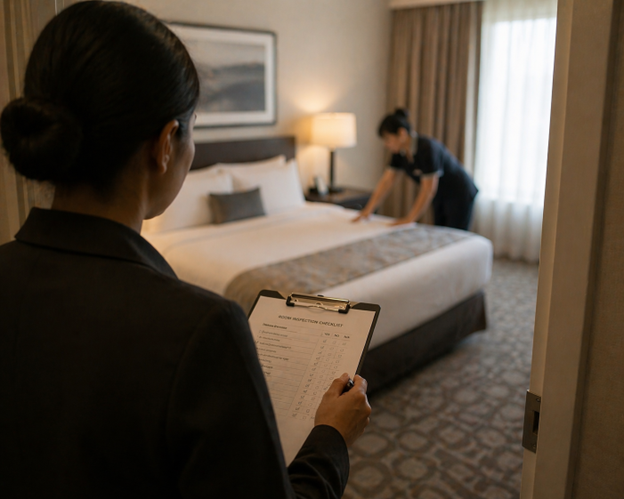
One hour, twice a week. That’s all it takes to tighten your housekeeping operation, reduce waste, and protect your bottom line.
In 2026 hotels have been under increasing pressure. Rising costs in labor, supplies, and logistics are squeezing margins across the industry. The instinct is to cut costs, which is a common mistake, because it often leads to a decline in guest experience and lower team morale.
As a long-time hotel General Manager and operator who has led multiple properties, I would challenge operators and leaders to focus on optimization instead. Cutting costs often creates short-term gains but leads to heavier long-term consequences. When you shift your perspective to optimization, you create a true win-win outcome. Optimization doesn’t remove value; it removes waste.
There are many areas in which you can optimize your small hotel. I have found that it is best to start with the room cleaning process. Getting this process right enhances guest satisfaction, improves employee morale, and carries cost savings to the bottom line. This approach is especially effective for limited-service hotels, boutique properties, and teams operating with lean staffing models.
Where to Begin: Putting a Room Audit Program in Place
A simple 4-step process to implement your room audit program using the OSTRO Framework: Observe, Strategize, Test, Refine & Operate.

Step 1: Observe
You can’t optimize what you haven’t clearly seen. Most leaders assume their process is working; until they actually watch it. When you do, approach it as a supporter, not an auditor. The room attendant should feel coached, not monitored or judged.
There are two items to inspect: the end product of a finished room and the actual cleaning process. When inspecting the end product, the goal is to understand the current state versus the desired state and discover any gaps. In many properties, even small inefficiencies in room cleaning can add up to thousands of dollars annually in excess labor, supply waste, and rework.
When a misalignment or gap is found, it is important to ask why. For example: if you offer two washcloths per room and you find one. When you ask the why, you find out there is a supply shortage and the room attendant did not have what they needed to finish the room properly. Then you can address the root cause of the gap.
Another common gap is the overuse of cleaning chemicals, for example: if a room attendant is using double the recommended amount of surface cleaner on every checkout room, the cost adds up fast across an entire floor, every day, every week. When you ask the why, you often find they were never shown the correct amount to use.
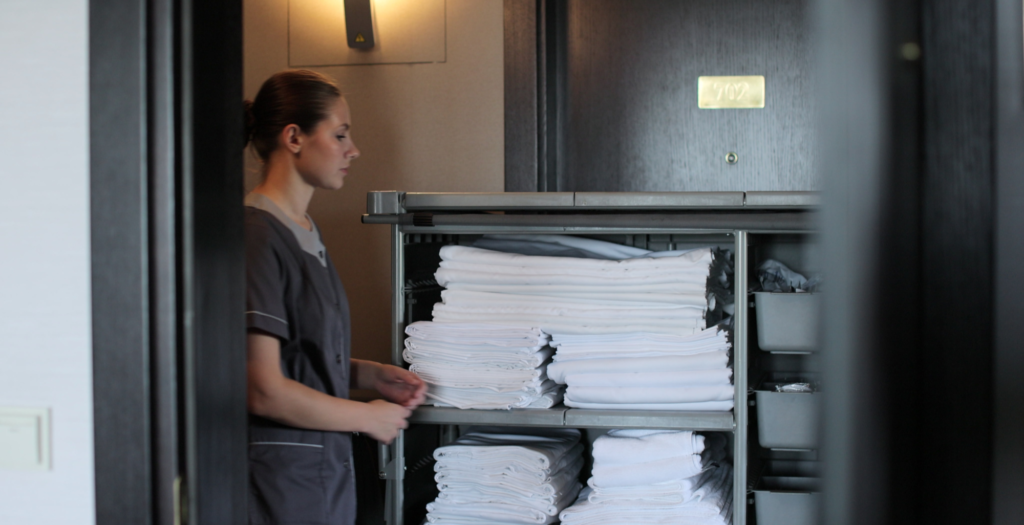
The second item is one I’ve seen more than anything else: lack of organization during the cleaning process. If the cart is not properly stocked before the shift starts, or the room attendant does not have what they need at hand, the result is lost time, too many trips back to the cart, and unnecessary delays that slow down the entire floor. This is a time killer. It delays room readiness and increases labor costs.
A well-organized cart and a consistent stocking process protect both the employee and the operation, reducing wasted movement and improving efficiency across every shift.
Step 2: Strategize
Once you have completed your observation, your next step is to build two things: a Cleaning Cycle Checklist (CCC) and a Room Ready Photo Reference (RRP). This is how you can create a simple and repeatable process that is also an effective training tool.
A common misconception in small properties is that the team is trained properly and everyone is on the same page. Most of the time, they are not, and it is not their fault. A standard was never clearly defined. A standard is the expectation for the level of quality that serves as a basis for comparison or evaluation. Without one, every room attendant is working from their own interpretation of clean, and that is where inconsistency begins.
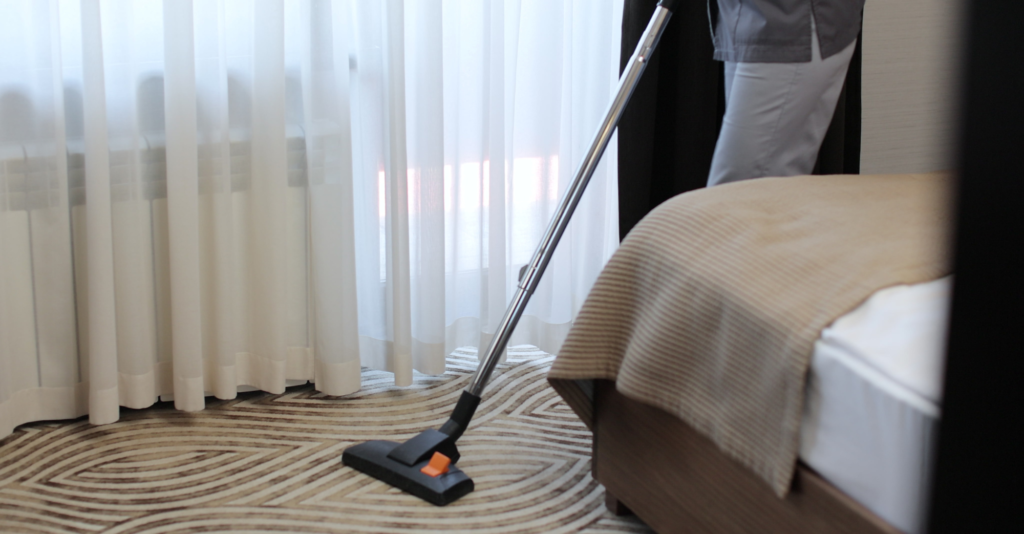
The Cleaning Cycle Checklist (CCC)
A good CCC usually includes a 5 to 12 step process in sequential order with estimated times associated with cleaning and resetting specific room areas or items. If you use preferred or specific cleaning chemicals, note them within the checklist along with when and how to use them.
The Room Ready Photo Reference (RRP)
Once you have defined the standard for your guest room, create it using real photos from your property; not stock images, so your team sees exactly what done right looks like. To accompany the photos, it is recommended to create an audit list. For example, some items that cannot be captured in a photo; such as “the room smells fresh and clean”,should be included in your audit checklist.
Want to see what a completed RRP looks like? Download a sample, design your own, print it, post it, and use it to train your team tonight. An RRP editable template and more resources are available free in The Back Office for subscribers.
Step 3: Test
This is the step of testing and validating the new standards. One hour, twice per week, can transform your housekeeping operation. As you look to optimize your room cleaning process and room standard, it is important to inspect what you expect.
It is recommended that in this one-hour block, you observe two cleaning cycles and five room inspections. If you are working in a smaller operation, another recommendation is to inspect 10% of your total room inventory. This is where you can assess consistency against your developed standards. This repetition will improve the consistency of your room cleanliness and improve guest satisfaction over time.
Step 4: Refine and Operate
Each week, less than two hours of auditing will provide you with an understanding of how to continuously improve your operation. Findings in the auditing process should drive your next actions, not just be noted and forgotten.
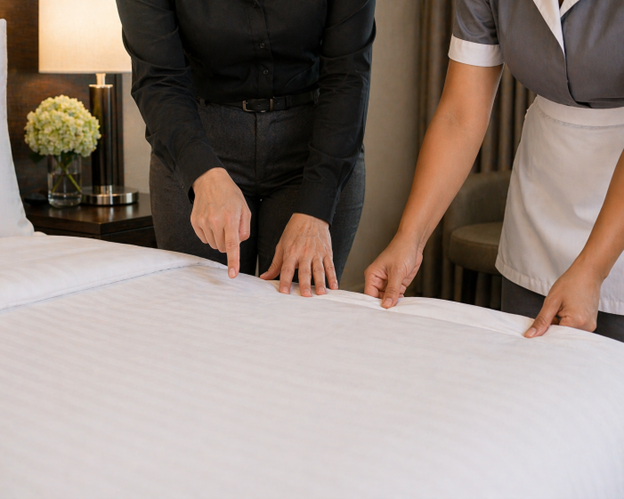
Typical findings can include:
- Too many trips to the cleaning cart or closet
- Overuse of guest room supplies
- Room supply shortages
- Training gaps in proper bed making procedures
- Unaddressed maintenance issues that can be costly if not corrected in real time
When looking into these gaps, it is important to understand the why. Most gaps can be solved with simple, clear, and consistent processes.
Process Beats Budget Every Time: Why This Works
Most of your operational hiccups are not people problems. They are process gaps. When a room attendant makes four trips to the linen closet, misses a spot under the bed, or uses twice the recommended cleaner, it is rarely because they don’t care. It is because nobody ever showed them a better way, and nobody has been watching consistently enough to catch it.
The OSTRO Framework works because it replaces assumption with observation, and observation with a standard. Once a standard exists, consistency follows. Once consistency follows, the costs take care of themselves; lower supply waste, faster room turns, fewer guest complaints, and a team that knows exactly what done right looks like.
You don’t fix housekeeping by spending more. You fix it by seeing clearly, building a repeatable process, and staying close enough to the work to catch the gaps before they cost you.
Final Thoughts
After more than 15 years in this industry, leading operations of all sizes, I realized a couple of things: first, hotels don’t need to cut costs to survive this market; they need to operate smarter. Second, and this holds true at every property size, the room is where the guest experience is most often won or lost. A bad check-in can shadow a perfect room. But a poorly cleaned room will erase a great check-in every time.

The four steps of the OSTRO method are not a corporate program. They are a practical framework any operator can start this week with the team they already have. You do not need a bigger budget or more staff. You need a standard, a process, and the discipline to inspect what you expect.
Start with one room. Build from there. The savings, the consistency, and the guest satisfaction will follow.
Three resources ready for you in The Back Office, our library built for small hotel operators:
– Cleaning Cycle Checklist
– Room Ready Photo Reference
– 100-Point Room Inspection Checklist
Not subscribed yet? Join here; it takes 30 seconds. Already subscribed? Check your welcome email for direct access.
If you’re looking for a more versatile version of the Room Inspection Checklist, we have a premium interactive edition in the Back Office. It runs offline on your phone, tablet or any portable device, auto-calculates your score, and flags every failed item in real time.
Nadine,


One Comment