

How to Evict a Hotel Guest Legally and Professionally
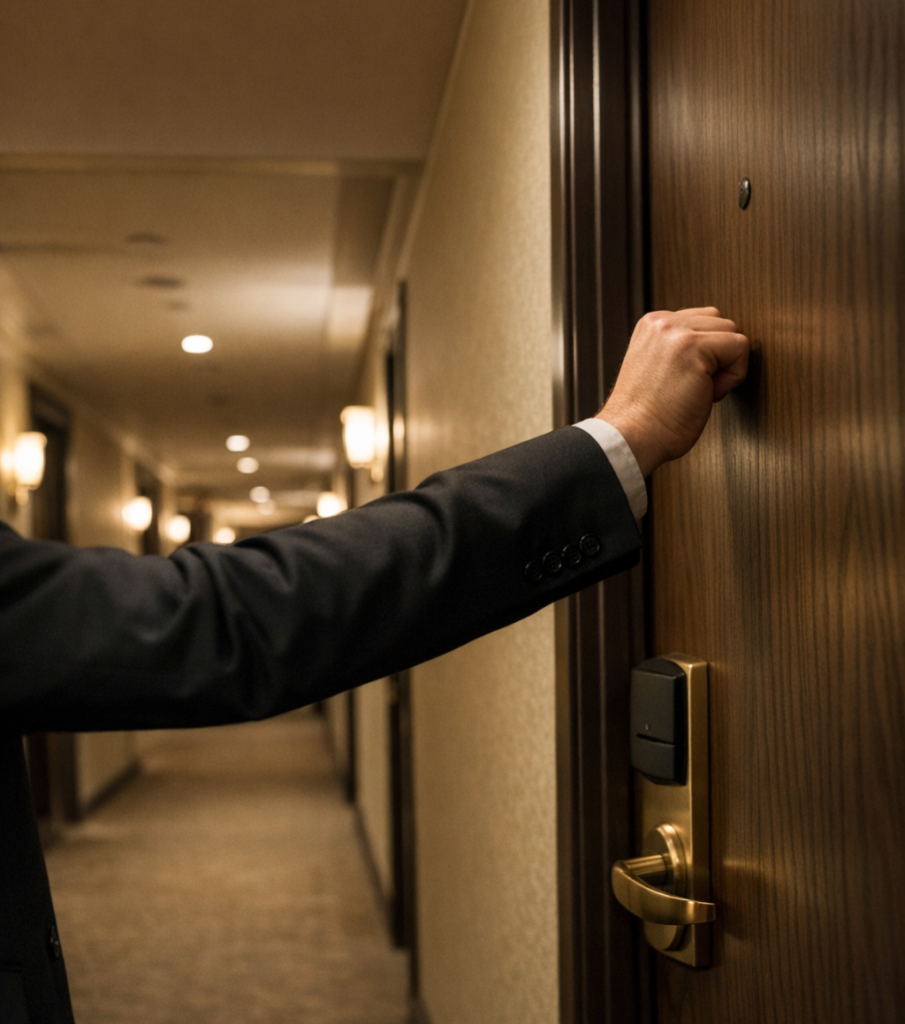
A Friday night. Three rooms. A bachelorette party. And a lesson about how to evict a hotel guest that every independent hotel operator needs to hear.
When a Bachelorette Party Took Over an Entire Floor
It was just past 2AM, when my front desk agent rang my cell. She wasn’t panicking, she was past that. She had already talked with the Night Auditor Supervisor three times. Each time, he told her to give them another warning. Each time, the noise came back louder.
“Danilo, I’ve done everything. Nobody is backing me up. The whole fourth floor is calling. I don’t know what to do.”
I got dressed and drove in. When I arrived, guests were already in the hallway in their pajamas, some with their luggage, ready to leave. The bachelorette group was on their third noise complaint, we had warned them four times, and was now entertaining a group of people who hadn’t even checked in. The Night Auditor Supervisor was at the desk, looking uncomfortable.
I pulled him aside. “What happened? Why didn’t you act?”
His answer: “They’re in three rooms. That’s almost $900 in revenue. I didn’t want to make that call.”
That was the revenue trap talking, and it almost cost us far more than $900.
I walked up to the fourth floor, knocked on the door, and within twenty minutes the entire group was checking out with their belongings, escorted to their vehicles. No police, no drama, no injuries. Just a clear, calm, professional eviction backed by policy and executed with authority.
That night taught me something I never forgot: inaction is never the safe choice when you need to figure out how to evict a hotel guest quickly.
When a Noise Complaint Becomes an Eviction
Not every noise complaint ends in an eviction. However, there is a line, and every operator needs to know where it is before they find themselves standing in a hallway at 2:00 AM, trying to figure it out in real-time.
(For a full breakdown of how to handle a guest disturbance before it reaches this point, read our guide: How to Respond to a Guest Disturbance at Your Small Hotel.)
A noise complaint becomes a hotel guest eviction situation when:
- Guest has received two or more warnings, and the behavior continues
- Guest becomes aggressive, threatening, or refuses to engage
- The room has unauthorized guests or is over the allowed occupancy
- Property damage has occurred
- Other guests are leaving or threatening to leave
- Staff or other guest’s safety is compromised
If any of these are happening, you are no longer dealing with a noise complaint. You are dealing with a guest who is violating the conditions of their stay and putting your property at risk.
Your first line of defense is simple. A Quiet Hours card placed in every room sets the expectation before a complaint ever happens. One card on the nightstand ends the ‘I didn’t know’ excuse before it starts.
If you like, download our editable, print-ready Quiet Hours Card. You can print it on any standard stock card paper, but for a cleaner, more professional finish, we recommend Avery 3379 – Printable Tent Cards ; available on Amazon. (This is an affiliate link, so we may earn a small commission at no extra cost to you.)
The three-warnings rule is a clean, defensible standard, warn once and educate, warn twice and offer alternatives, act if the behavior doesn’t stop by the third. Sometimes the behavior is severe enough that you skip straight to eviction. Use your judgment. Trust your instincts.
The Revenue Trap; And Why Inaction Always Costs More
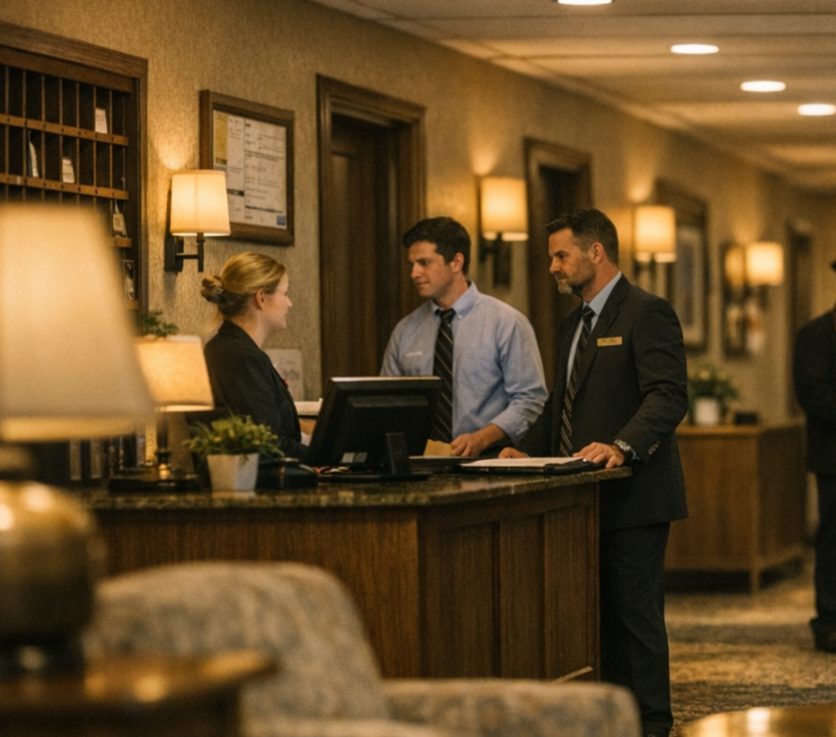
The Night Auditor Supervisor that night wasn’t lazy or a bad person. He was caught in a revenue trap. The belief that keeping the wrong guest in the building is always better than losing the revenue.
Financials put real pressure on operators every day, I get it. But here is the truth: inaction in situations like this costs you far more than three rooms ever will.
Here’s what inaction actually costs you:
- Other guests check out early, and they don’t come back
- Online reviews, “The hotel did nothing while the party next door went until 4:00 AM”
- Staff morale, your team stops trusting management will back them up
- Legal exposure, if another guest is harassed or injured and you failed to act, that’s a serious problem
- Your reputation, which is worth far more than three rooms on a Friday.
Where are the $900 the supervisor was so determined to protect? Three guests checked out at 3:00 AM and requested refunds. We lost more than we would have kept
Understanding the Legal Process of How to Evict a Hotel Guest
Here’s what most small operators don’t know: you have significant legal authority over your property.
Innkeeper laws, which exist in every U.S. state, give hotel operators the right to remove a guest from the premises when that guest is:
- Disturbing other guests
- Violating the property’s policies
- Engaging in illegal activity
- Threatening the safety of staff or other guests
- Damaging property
- Refusing or failing to pay for their stay
You do not need a security team or a lawyer on speed dial. You need a clear policy, a calm approach, and the confidence to enforce what you have every right to enforce.
Here’s an important legal distinction when learning how to evict a hotel guest: you are not evicting a tenant, you are ending a license to occupy, which is legally different from a lease. That distinction matters. You are allowed to do this as long as you have a documented reason, you communicate clearly, and you give the guest a reasonable opportunity to comply.
Once a guest has paid and checked in, they have a legal right to occupy that room; unless they violate your policies or the law. This is exactly why your policies need to be in writing, agreed to at check-in, and consistently enforced. Your three-warnings policy isn’t just a courtesy, it’s your legal foundation.
Step-by-Step: How to Approach and What to Say
When it’s time to act, how you handle the approach determines everything. Here’s the framework:
Before You Knock:
- Bring a witness, another staff member, a manager, anyone
- Document the complaints you’ve already received (use a Noise Complaint Log to record each call, the time, the room number, and who received it)
- Know exactly what you’re going to say before you say it
- Stay calm. Your tone sets the tone for everything that follows
At the Door:
“Good evening. I’m [Name], the manager on duty. We’ve received multiple noise complaints from neighboring rooms tonight, and we’ve spoken with you twice [as many times] already. At this point, I need to ask you and your group to check out. I’ll have your folio and receipt ready at the front desk. You’re welcome to gather your belongings, we’ll give you 20 minutes.”
Short. Clear. Non-negotiable.
Do not argue, do not apologize, or over-explain. State the situation, state the outcome, and give them a reasonable timeframe.
If They Refuse:
“I understand you’re frustrated. However, this is not a request, it’s a requirement under our property policy and [State] innkeeper law. If you choose not to leave, we will need to contact law enforcement to assist.”
Then follow through.
When and How to Call Law Enforcement
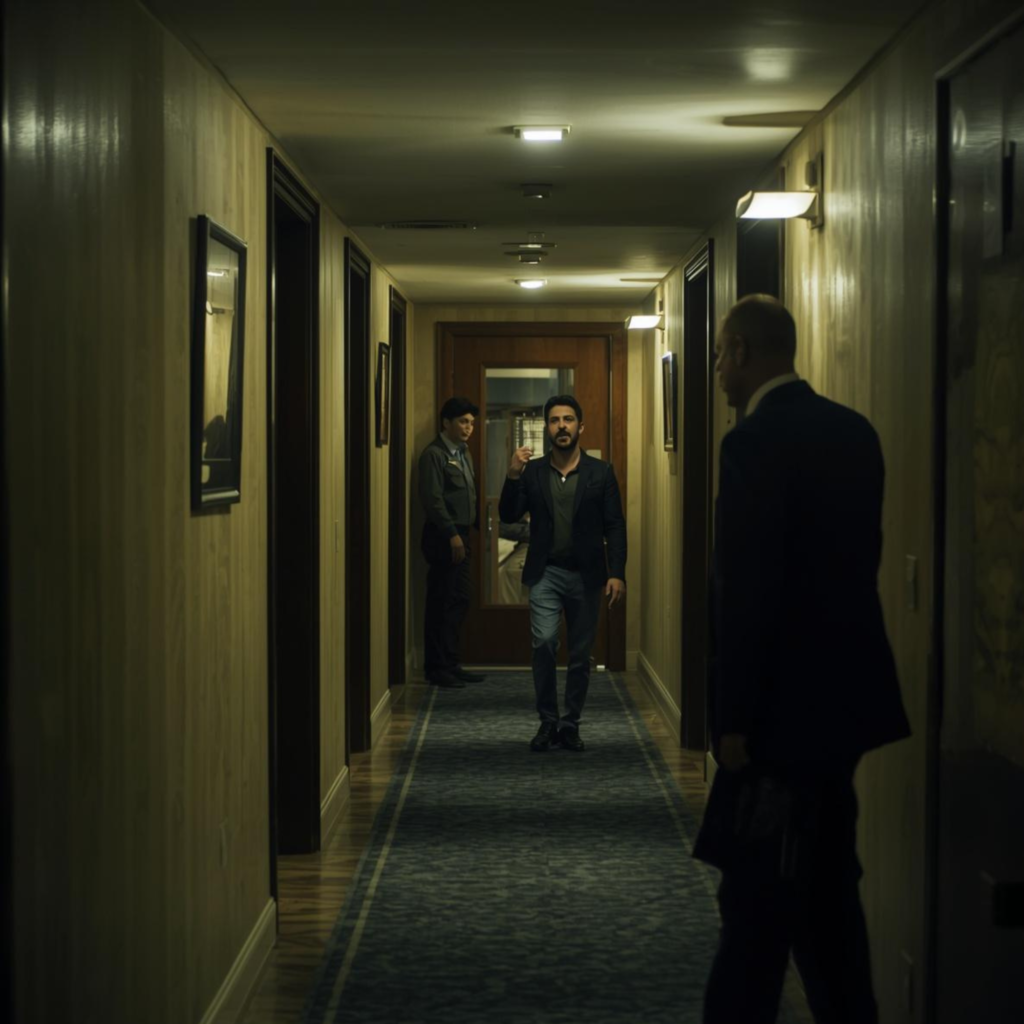
Call the authorities immediately, and do not attempt to escalate the situation further yourself, if:
- The guest becomes physically aggressive or threatening
- There are threats of violence toward staff or other guests
- You suspect illegal activity beyond noise
- The guest refuses to leave after being formally asked
How and What:
Stay calm, keep your tone steady, and be direct. Dispatch will normally guide you. Your job is to give them clear information fast.
“Hi, my name is [Your Name]. I’m the manager at [Property Name], located at [Full Address]. We are a hotel. We have a guest who has been instructed to leave due to policy violations and disturbance to other guests. They are refusing to vacate. We need assistance.”
Four things: who you are, where you are, what happened, what you need. That’s it.
Stay on the line, answer their questions, and let them guide the rest of the conversation. Don’t give extra details, they are not asking for.
Police understand this situation. They deal with it constantly. You are not bothering them.
When Officers Arrive:
Meet them at the entrance, not in the hallway, not at the room door. Brief them calmly before they go up. Have your documentation ready:
- The noise complaint logs
- The warnings issued and by whom
- The guest’s name and room number
- Any property damage or evidence observed
Hand them the facts and step back. Your role at that point is to provide information, not to manage the situation physically. Let law enforcement do their job, that’s exactly what they’re there for.
Document Everything: Before, During, and After
Documentation is what protects you if this ever becomes a legal dispute, an insurance claim, or a chargeback.
Before you knock on that door, you should already have:
- Time and nature of each complaint
- Name of the staff member who received it
- Time and content of each warning issued
- Names of the registered guests
After the eviction, document:
- Time when the eviction happened
- What was said and by whom
- Was law enforcement called?
- Condition of the room upon departure
- Any property damage observed
- Other rooms affected, note these for service recovery follow-up
- Outcome, refund decisions, and reasoning

Use our Premium Incident Report Form to document every detail professionally and legally. Built specifically for small hotel operators with no corporate backup.
The Post-Eviction Financials: The Refund Question
This question comes up every single time an operator learns how to evict a hotel guest: do I refund their money?
Honest answer: it depends.
If the guest violated your policy clearly and repeatedly, you are generally not obligated to refund the night. However, a partial refund for unused nights is often the cleanest way to end the situation without a chargeback dispute.
Whatever you decide, document your reasoning and be consistent. Inconsistency is what creates legal exposure.
Final Thoughts
The bachelorette group that night left without incident. The fourth floor quieted down. Three guests who had complained returned to the desk, thanked us, and one of them left a five-star review the next morning specifically mentioning that management handled the situation professionally.
That’s how you evict a hotel guest properly. Not dramatic. Not aggressive. Just clear, calm, and professional.
Small properties don’t need a security department or a corporate legal team to handle these situations. They need a policy, a process, and the confidence to enforce both.
And if this situation taught you anything, it’s that documentation starts before you ever knock on that door. A simple Noise Complaint Log and a clear Noise Complaint Response SOP can be the difference between a defensible eviction and a chargeback dispute you can’t win.
Both of these resources are available in The Back Office, our subscriber resource library built by operators, for operators. Not a subscriber yet? Join here , it takes 30 seconds. Already subscribed? Check your welcome email for direct access.
Danilo,


2 Comments